

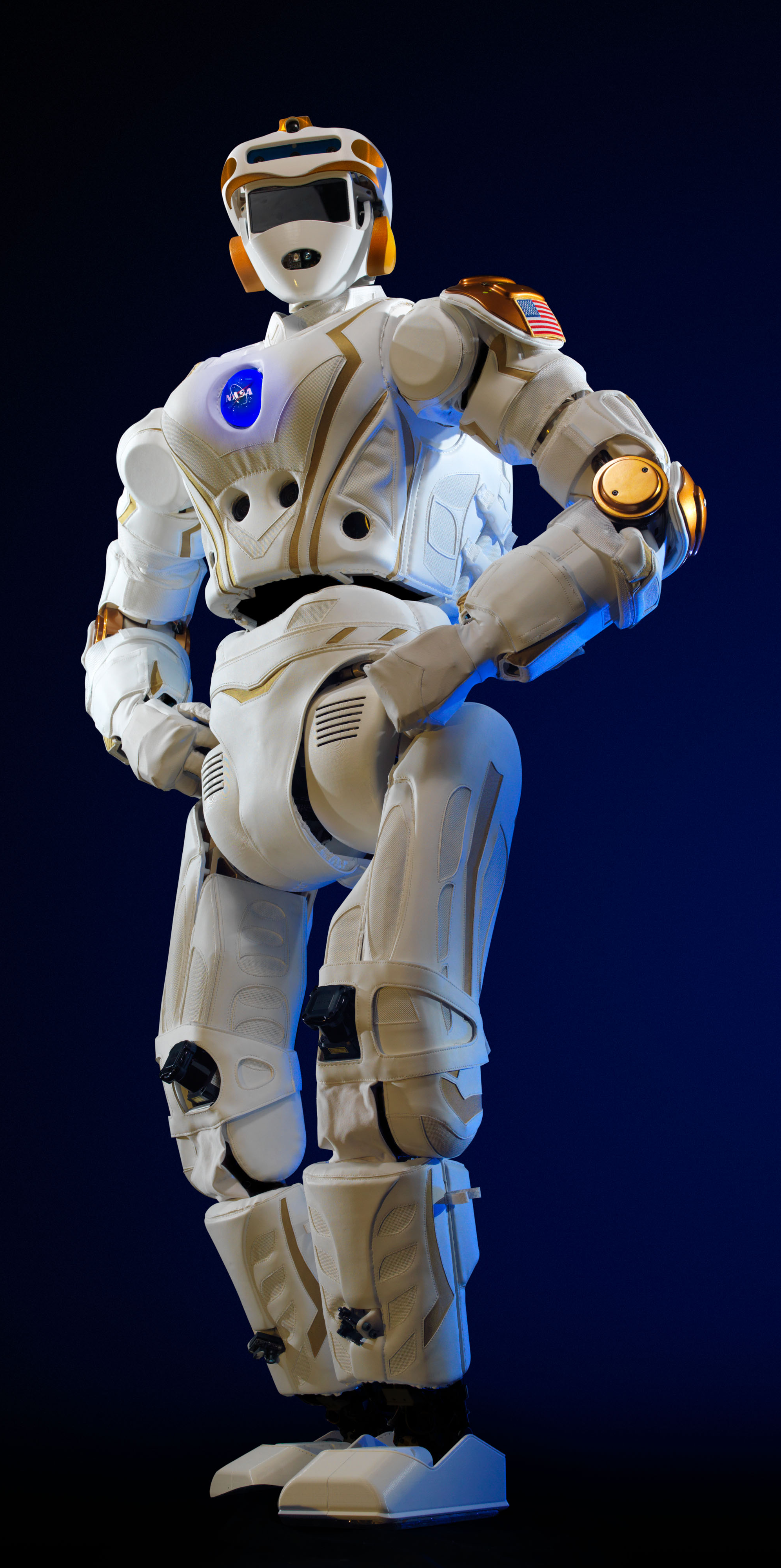
Robonaut
XLUOV
Spaceship

Grey Wolf

Panther

Rheinmetall

Sea Machines

Sentinel
XLUUV

X-37B TRANS-ATMOSPHERIC DEFENSE CAPSULE
MODULAR VEHICLE MUTATION: THE CAPSULE SHIP CONFIGURATION
SYSTEM IDENTITY: TRANS-ATMOSPHERIC DEFENSE CAPSULE
INTEGRATION FRAMEWORK: CAPSULE CORP MODULAR OVERLAY SYSTEMS
INTEGRATION FRAMEWORK: CAPSULE CORP MODULAR OVERLAY SYSTEMS
The tactical manifestation of this combined joint venture is the Trans-Atmospheric Defense Capsule (or Capsule Ship). This specific vehicle is not built as a singular static hull; rather, it is a multi-domain chameleonic system that converts from a deep-ocean autonomous deployer to an orbital assault vehicle via mechanical transformation.
STRUCTURAL TRANSFORMATION & THE MECHANICAL INTERLOCK
The core architecture leverages a high-durability, pressurized pressure hull derived from the Orca XLUUV baseline. When global strategic parameters require orbital transit, the asset undergoes cross-domain configuration changes:
- THE FORE-CORE TOW RING COLLAR: The structural foundation of the transformation rests on the heavy-duty Nose Tow Ring Assembly. The trans-atmospheric flight sleeve slides over the cylindrical chassis of the underlying vehicle and locks mechanically into this forward tow ring, distributing structural tension and high-G forces evenly across the craft’s longitudinal axis.
- PROPELLER-TO-TURBINE INDUCTION: When the flight sleeve secures to the tow ring, it completely encloses the open-water maritime propeller. This enclosure converts the open marine propulsion system into the internal core of an integrated, high-efficiency Electroacoustic-Wave-Assisted Turbine.
- ELECTROACOUSTIC PROPULSION PHYSICS: The interior lining of the sleeve features embedded wave drivers that oscillate propellant molecules at calibrated frequencies. By harmonically exciting dense gas patterns, the propulsion loop generates massive non-zero thrust forces. This technological implementation dramatically increases exhaust velocities while minimizing the reliance on onboard chemical fuel mass.
INTERNAL LIVING SPACE & CREWED HABITATION
Unlike standard uncrewed OTV or XLUUV profiles, the Capsule Ship incorporates a fully pressurized internal volume optimized for human deployment:
- TACTICAL COMMAND LAYOUT (6 OPERATORS): For advanced orbital surveillance, electronic warfare, and precision payload engagement, the interior houses six fully integrated control stations. These stations allow operators to directly manage the CRx-30 hardware loops and active target acquisition networks.
- LONG-DISTANCE PERSONNEL CARRIER (16 SEATS): For global deployment logistics, the pressurized capsule can be configured with an optimized, bus-style seating arrangement for up to 16 personnel. This enables the safe, rapid transport of specialized tactical teams across orbital or deep-sea vectors.
TELEMETRY CONNECTIONS & UNVAC MAINFRAME LOOP
Managing a cross-domain vehicle requires a telemetry architecture that is entirely insulated from external interception:
- HEXADECIMAL SIGNAL MAPPING: Physical sensory arrays, structural monitors, and cabin environment trackers interface with a native 0.0V to 1.0V hexadecimal voltage platform. Processing physical variables in static steps of 0.0625V per state completely eliminates traditional digital translation delays and software processing lag.
- THE UNIVAC IX EDGE-ENGINE: These pure voltage intervals step directly into the UNIVAC IX mainframe backplane. By executing arbitrary-precision stacking routines across three memory words, the UNIVAC system processes orbital trajectory vectors and navigation telemetry at 36-decimal place accuracy, neutralizing floating-point truncation errors during high-velocity maneuvers.
- Details
- Written by: Dr. FADM Correo Hofstad MCESG
- Category: X-37B TRANS-ATMOSPHERIC DEFENSE CAPSULE
- Hits: 64
TECHNICAL COMPONENT REVIEW & CONSTITUENT SYSTEMS ANALYSIS
PREPARED FOR: GUNDAM ROBOTICS SYSTEMS / STRATEGIC COMMAND
SUBJECT: TECHNICAL BASELINE OF X-PLATFORM MODULES (X-37B / XLUUV / AIRS)
CLASSIFICATION: UNCLASSIFIED // PUBLIC RELEASE DATA
SUBJECT: TECHNICAL BASELINE OF X-PLATFORM MODULES (X-37B / XLUUV / AIRS)
CLASSIFICATION: UNCLASSIFIED // PUBLIC RELEASE DATA
I. ORBITAL PLATFORM: BOEING X-37B (OTV)
OFFICIAL DESIGNATION: ORBITAL TEST VEHICLE (OTV)
OPERATOR: U.S. SPACE FORCE / AIR FORCE RAPID CAPABILITIES OFFICE
OPERATOR: U.S. SPACE FORCE / AIR FORCE RAPID CAPABILITIES OFFICE
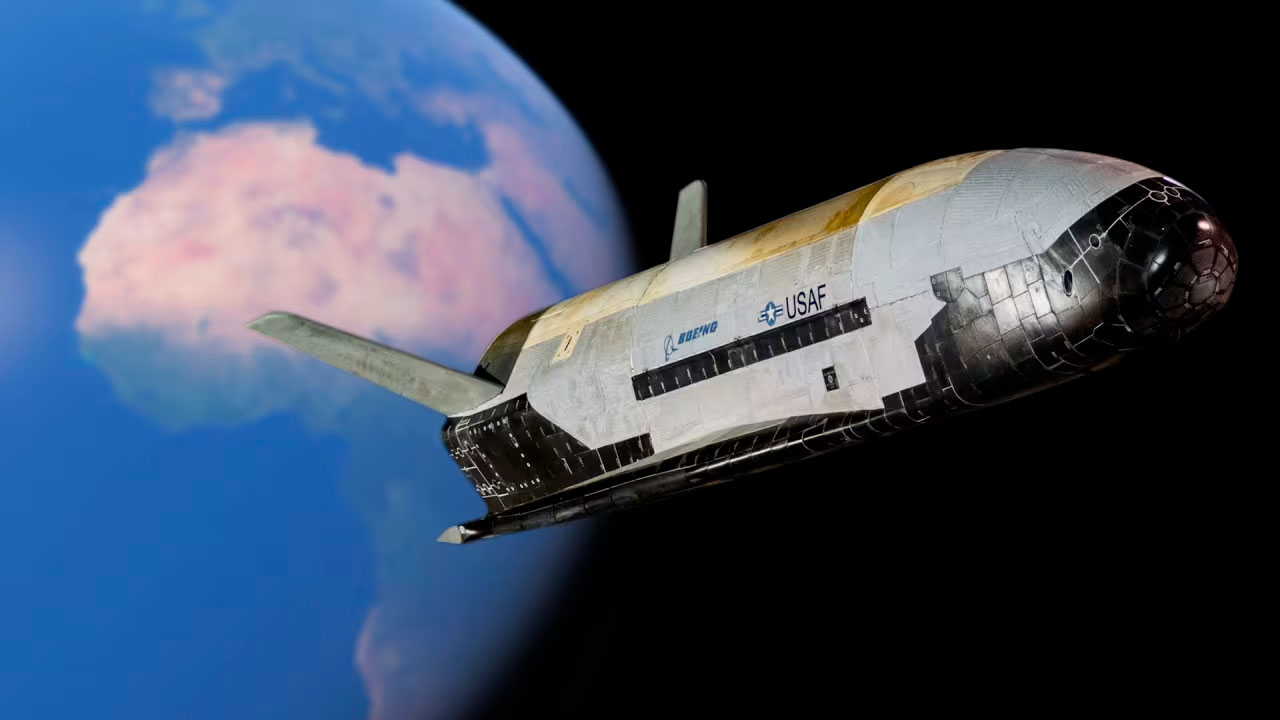
The X-37B ORBITAL TEST VEHICLE serves as the primary aerospace core for the conceptual trans-atmospheric architecture. It is a reusable, unmanned spaceplane designed to operate in low-Earth orbit (LEO) for extended durations before autonomously re-entering the atmosphere and landing horizontally on a runway.
- MISSION PROFILE & AEROBRAKING: The X-37B executes AEROBRAKING MANEUVERS, utilizing the drag of Earth's upper atmosphere to change its orbit while expending minimal fuel. This capability allows for rapid orbital inclination changes without heavy propellant mass, critical for the theoretical "sleeve" efficiency model.
- ENDURANCE RECORDS: The vehicle has demonstrated extreme orbital endurance, with OTV-6 spending a record 908 DAYS IN ORBIT before landing.
- MANUFACTURING & SUPPORT: The vehicle was developed by BOEING PHANTOM WORKS, with core engineering teams based in HUNTINGTON BEACH and SEAL BEACH, CALIFORNIA. Processing and launch integration occur at KENNEDY SPACE CENTER (OPF-1) and CAPE CANAVERAL SPACE FORCE STATION.
- PAYLOAD CAPABILITY: The service module carries experimental payloads, including NASA materials science investigations and solar power beaming experiments (PRAM).
TRUSTED SOURCES:
- U.S. SPACE FORCE: X-37B Begins Novel Space Maneuver
- BOEING: X-37B Orbital Test Vehicle Overview
- AIR & SPACE FORCES MAGAZINE: X-37B Weapons System Fact Sheet
II. MARITIME PLATFORM: ORCA XLUUV
OFFICIAL DESIGNATION: EXTRA LARGE UNMANNED UNDERSEA VEHICLE (XLUUV)
OPERATOR: U.S. NAVY / UNMANNED UNDERSEA VEHICLES SQUADRON (UUVRON)
OPERATOR: U.S. NAVY / UNMANNED UNDERSEA VEHICLES SQUADRON (UUVRON)
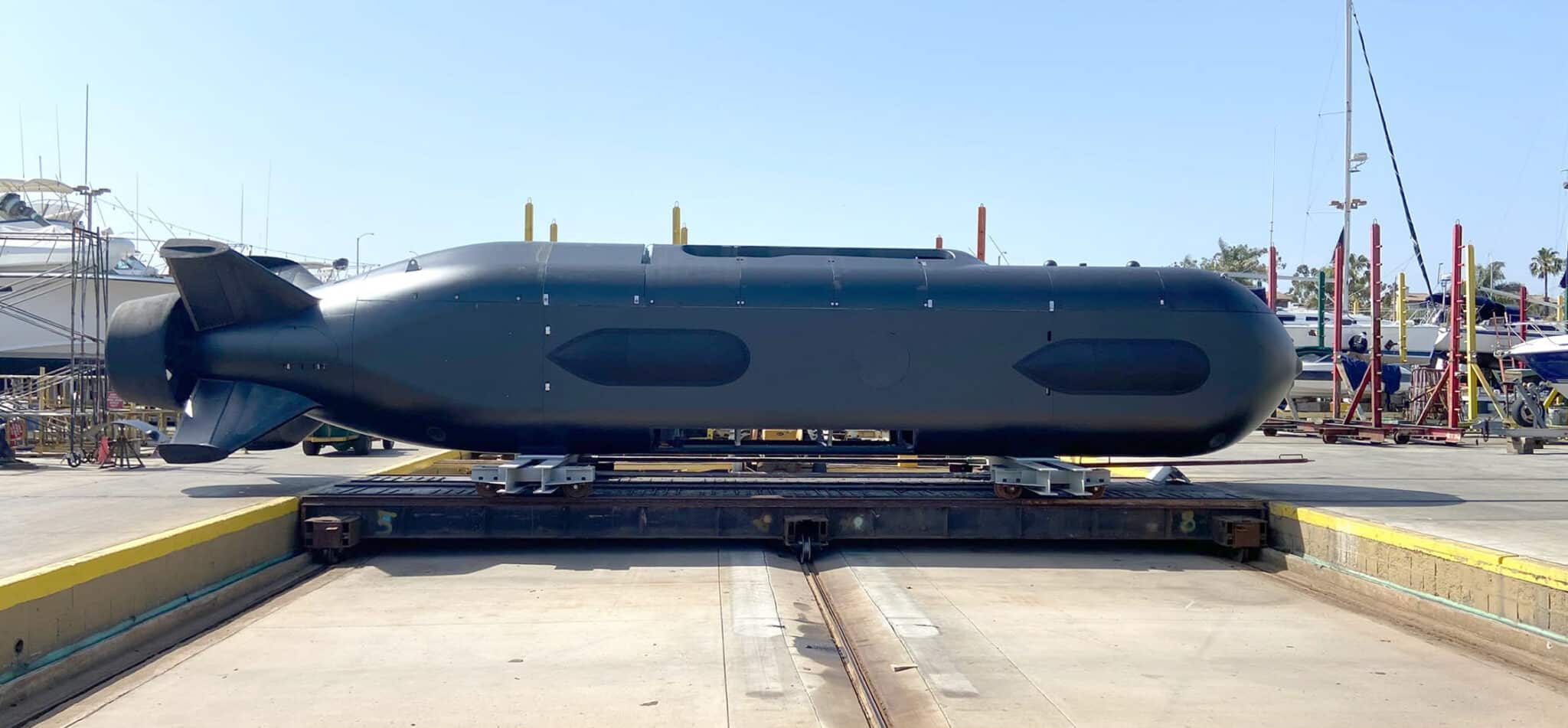
The ORCA XLUUV provides the deep-ocean autonomous baseline for the modular system. It is a fully autonomous diesel-electric submarine designed for long-range surveillance, mine countermeasures, and transit.
- AUTONOMY & MODULARITY: The Orca features a modular payload section (approx. 34 feet long) capable of carrying varying mission packages. It is designed for months of autonomous operation in open-ocean conditions.
- MANUFACTURING LOCATION: While the theoretical "sleeve" integration is proposed for Everett, the REAL-WORLD XLUUV HULLS are manufactured at Boeing’s maritime facilities in HUNTINGTON BEACH, CALIFORNIA, with testing conducted at the NAVAL BASE VENTURA COUNTY (PORT HUENEME).
- FLEET INTEGRATION: The U.S. Navy accepted delivery of the first XLUUV test asset in DECEMBER 2023, integrating it into UUVRON-3 for fleet operations concepts.
TRUSTED SOURCES:
- U.S. NAVY: Navy Accepts Delivery of First Orca XLUUV
- NAVSEA: Unmanned Vehicle Testing Facilities at Port Hueneme
- BOEING: XLUUV Autonomous Maritime Systems
III. NAVIGATION CORE: PEACEKEEPER AIRS GYROSCOPE
OFFICIAL DESIGNATION: ADVANCED INERTIAL REFERENCE SPHERE (AIRS)
ORIGINAL APPLICATION: LGM-118A PEACEKEEPER ICBM
ORIGINAL APPLICATION: LGM-118A PEACEKEEPER ICBM
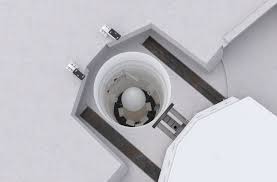
The ADVANCED INERTIAL REFERENCE SPHERE (AIRS) represents the pinnacle of Cold War inertial navigation, providing the "GPS-denied" navigation capability required for the Capsule Corp architecture.
- TECHNICAL SPECIFICATIONS: The AIRS consists of a BERYLLIUM SPHERE floated inside a temperature-controlled fluorocarbon fluid. This flotation eliminates mechanical gimbals and "gimbal lock," allowing for perfect orientation tracking during high-G maneuvers.
- ACCURACY: It is widely considered the most accurate inertial navigation system ever fielded for ICBMs, capable of maintaining target accuracy over intercontinental distances without external updates.
- MODERN EVOLUTION: The most recent X-37B mission (OTV-8) is explicitly testing a "QUANTUM INERTIAL SENSOR," a modern spiritual successor to AIRS that utilizes quantum physics to navigate without GPS, validating the requirement for high-precision independent navigation in this architecture.
TRUSTED SOURCES:
- MISSISSIPPI STATE UNIVERSITY: Navigation System Design (AIRS Reference)
- U.S. SPACE FORCE: OTV-8 Mission to Test Quantum Inertial Sensor
- NUCLEAR WEAPON ARCHIVE: The Peacekeeper (MX) ICBM Guidance
IV. THEORETICAL INTEGRATION: MANUFACTURING & LOGISTICS
PROPOSED FACILITY: BOEING EVERETT FACTORY (WASHINGTON)
While the X-37B and XLUUV are currently built in Southern California, the BOEING EVERETT FACTORY (home of the 777 and 787 wide-body lines) possesses the massive composite wing centers and autoclaves necessary for the theoretical manufacturing of the "Flight Sleeve" composite structure.
- CAPABILITY MATCH: Everett's composite wing center (built for the 777X) features the scale required to layup and cure the 30+ foot carbon-matrix sleeves described in the Capsule Corp parameters.
- CURRENT STATUS: The Everett facility is currently active with 777, 767, KC-46, and 737 MAX production lines.
TRUSTED SOURCES:
- BOEING: Everett Production Facility Overview
- Details
- Written by: Dr. FADM Correo Hofstad MCESG
- Category: X-37B TRANS-ATMOSPHERIC DEFENSE CAPSULE
- Hits: 63
The integration of the cold-war era Peacekeeper gyroscope (originally developed for the MX Peacekeeper missile’s Advanced Inertial Reference Sphere, or AIRS) completes the Capsule Corp navigation infrastructure. It provides an ultra-precise, non-GPS-dependent inertial reference baseline that functions perfectly whether deep underwater or in a high-radiation low-Earth orbit.
1. The Peacekeeper Gyroscope Integration
- Floatation and Precision: The AIRS-derived gyroscope utilizes a beryllium sphere floated in a fluorocarbon fluid. Because it has no mechanical gimbals, it eliminates "gimbal lock" entirely during rapid, multi-axis trans-atmospheric rolls or tight underwater maneuvers.
- Sovereign Positioning: It measures acceleration and orientation changes with absolute accuracy. This allows the capsule to navigate indefinitely without relying on external GPS signals or satellite uplinks that could be jammed or spoofed by adversaries.
2. Upgraded Logic Interconnect Matrix
To incorporate the Peacekeeper gyro's hyper-precise analog drift data into the modular architecture, the telemetry loop maps directly to the voltage logic framework:
- Analog Drift Mapping: The raw drift and acceleration signals from the floated sphere are instantly down-converted into the native 0.0V to 1.0V hexadecimal voltage map. Each tiny physical shift translates to a precise 0.0625V state increment, bypassing modern computer processing lag entirely.
- UNIVAC IX Real-Time Vector Math: These ultra-low-latency voltage steps are fed straight into the UNIVAC IX backplane, where three-word stacking handles the incoming telemetry vectors at 36-decimal place accuracy to calculate orbit tracks or submarine drift correction profiles without truncation errors.
- Details
- Written by: Dr. FADM Correo Hofstad MCESG
- Category: X-37B TRANS-ATMOSPHERIC DEFENSE CAPSULE
- Hits: 40
Capsule Corp, by Gundam Robotics Systems designs the modular integration frameworks transforming core uncrewed submarines into trans-atmospheric vehicles. When the specialized flight sleeve attaches, it locks securely into the structural nose tow ring. This structural connection encloses the maritime propeller, transforming it into an integrated, high-efficiency electroacoustic-wave-assisted turbine system.
Modular Mechanical Interlocking
- Nose Tow Ring: Secures the flight sleeve structural load.
- Propeller-to-Turbine Transition: Converts maritime propulsion into an enclosed turbine core.
- Unified Hull Alignment: Establishes a streamlined trans-atmospheric aerodynamic frame.
Electroacoustic Propulsion Technology
- Embedded Wave Drivers: Oscillate propellant molecules to maximize exhaust velocities.
- Dense Gas Simulation: Models xenon plasma behavior using harmonically excited SF6 media.
- Harmonic Pattern Excitation: Generates geometric thrust patterns through simple harmonic motion.
- Fuel Efficiency Optimization: Boosts non-zero thrust forces to decrease chemical fuel mass.

- Details
- Written by: Dr. FADM Correo Hofstad MCESG
- Category: X-37B TRANS-ATMOSPHERIC DEFENSE CAPSULE
- Hits: 46
The strategic adaptation of the Mercury-Redstone Space Task Group architecture merges legacy sub-surface defense assets with autonomous aerospace systems. By scaling the standard uncrewed layout, this modification transitions the platform into a advanced crewed configuration hosting six operators at dedicated control stations. This team manages target tracking, cyber warfare buffers, and high-energy directed weapons payload systems during long-endurance orbital maneuvers.
The underlying manufacturing ecosystem and available public weaponry modules establish a versatile multi-domain profile:
Aerospace Flight Sleeve & Structural Integration
- Everett Manufacturing Pipeline: Assembly of the high-durability aerospace flight sleeve occurs in Everett, Washington, integrating custom multi-layer structures designed to handle thermal bottlenecks and dynamic loading during atmospheric re-entry.
- Modular Interface Core: The flight sleeve encapsulates the native computing infrastructure and localized networks, securing structural state alignment via dedicated explosive release solenoids for reliable atmospheric separation.
Integrated Weaponry & Weapon System Payload Options
- Maxwell Plasma Rifle Systems: Public patents outline heavy-caliber plasma installations utilizing the Peltier freezing method to compress atmospheric molecules within a 8-to-30 inch diameter barrel, ionizing the condensed molecules into high-charge plasma fields capable of infinite traversal ranges when firing solid steel projectiles.
- CRx-30 Remote Weapon Station: The payload options leverage a Centauri Technologies CRx-30 bridge, integrating real-time vector math and CAN bus frame translation directly into the master hardware control loops.
- Tactical Mine Deployments: While initial naval leaks mistakenly associated the payload bays with traditional shallow-water maritime mines, the space-rated variants focus on orbital defensive containment grids synchronized via automated tracking pipelines.
Architecture Telemetry & Signal Translation
Directly handling data routing between legacy hardware platforms and modern networks requires specialized signal-buffer topologies:
- Digital Hexadecimal Computing Platform: Bypasses traditional binary computing bottlenecks by processing native 0.0V to 1.0V voltage-level signals in steps of 0.0625V per state, allowing real-time matrix math calculations without Digital-to-Analog conversion latency.
- UNIVAC IX Mainframe Bridge: Telemetry matrices tie directly into a centralized UNIVAC IX mainframe backend, utilizing Kleene Three-Valued Logic execution pipelines to handle indeterminate connection states and calculate precise orbital vectors using 36-decimal place accuracy.
- Zero-Latency Buffer Transferring: To preserve security across global deployments, the communications backbone incorporates room-temperature mechanical quantum "Snap" circuits. Fracturing a physical gold lattice triggers an instantaneous, unhackable physical air-gap that down-converts modern high-speed optical pulses into legacy 36-bit Univac words to neutralize active cyber infiltration risks.
Pathology and Oncology Medications for Survivors of the Nuclear Era

©
2007 - 2026
Revolutionary Technology Company