

Robonaut

XLUOV

Spaceship

Grey Wolf
Panther

Rheinmetall

Sea Machines

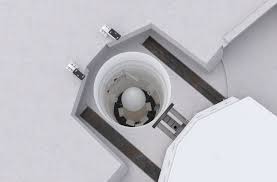
Sentinel
XLUUV

CRX-30 BRIDGE FOR UNIVAC IX
Strategic Integration Assessment: The CRx-30 to UNIVAC IX Bridge Framework
Developed for Gundam Robotics Systems Implementation Operations Node
The deployment of the UNIVAC IX Strategic Multi-Domain Interlock Bridge for the Centauri Technologies CRx-30 Remote Weapon Station (ROWS) marks a major advancement in automated combined-arms coordination. Built to integrate legacy computing architectures with modern tactical assets, this edge computing network provides field platforms—such as the M1151 Tactical Humvee Platform (#8120)—with real-time data translation, high-speed collision avoidance, and automated physical system management.
Operating completely independently of continuous cloud connectivity, the node maintains a localized 32-Bit Master Control Register Matrix. This layer handles real-time data translation loops locally, ensuring total operational capability even if connection to
https://univac.online is completely lost.1. Unified Combat System Topology
The platform integrates multi-domain military asset vectors into a single automated fire control loop. Legacy parallel signals, modern CAN bus frames, and Software-Defined Radio (SDR) data pipelines are processed using Numba JIT-compiled optimization kernels, generating microsecond-level physical overrides to secure the battlefield grid.
2. Multi-Domain Systems Core Portfolio
The codebase combines specialized data translation gateways to coordinate tactical, environmental, and personnel assets seamlessly:
- Fire Control & Weapons Interlock (
kdo58_nike_missile_bridge.py): Integrates the Nike Control Board telemetry layer with the Rheinmetall Kommandogerät-58 calculation engine. It decodes multi-speed Selsyn phases at frequencies over 100 Hz to calculate future anti-air intercept vectors and guide vehicle-launched Nike missiles via active remote overrides. - Active Roll-Mitigation & Collision Avoidance (
collision_avoidance_core.py): Runs an advanced Model Predictive Control (MPC) trajectory framework. When forward optics detect an imminent obstacle, the system commands the hydraulic suspension to actively lean into the turn, lowering the vehicle's dynamic center of gravity to counteract roll forces during sharp evasive maneuvers. - Micro-Optical Rifling Threat Detection (
rifling_threat_detector.py): Overclocks camera capture pipelines to perform micro-geometric shape analysis. By running Fourier Transform Shape Descriptor pattern loops, the system identifies the spiral lands and grooves of a hostile weapon barrel pointing at the vehicle, instantly deploying multi-spectral smoke screens and returns fire before ordnance is discharged. - Air-to-Ground Human-Machine Teaming (
alfa_aviation_gateway.py): Interlocks the Bell Aircraft Laboratory for Future Autonomy (ALFA) fly-by-wire flight-control avionics with ground assets. It maps real-time flight vectors over an isolated Amplitwist / Frequency-Modulated Continuous Wave (FMCW) sideband spectrum to enable communications without disrupting standard tactical radio traffic. - Strategic Heavy Freight & Convoy Logistics (
federal_responder_bridge.py): Manages tactical data lines for armed combat trains, 18-wheeler supply convoys, and heavy equipment transporters. It monitors cargo manifest center of gravity lines, pneumatic air brake pipe pressures, and tool PTO metrics across frontline engineering platforms. - Personnel Telemetry & Wearable IFF Gateway (
soldier_telemetry_gateway.py): Treats Belleville and Wellco tactical boots as wireless data nodes to track troop coordinates and stride rates. It monitors vital sign safety limits (Heart Rate, SpO2, Core Temperature) and interfaces with FLIR IFF thermal reflective badges to prevent friendly fire incidents. - Sovereign Cyber Autonomy Gateway (
cyber_takeover_interlock.py): Runs the core mitigation routines ofMachine-Language-Chess. If application-layer perimeters (such asmod_securityorcPHulk-CIST-Biopharma) log an active exploitation signature, a software interrupt traps the hostile connection vector inside an infinite execution loop to capture and analyze the threat.
3. The 32-Bit Master Control Register Matrix
To establish a uniform instruction pipeline across all vehicular, maritime, and airborne assets, the framework aggregates hardware metrics into explicit bitmask assignments:
0x00000001(Bit 0): Propulsion Crawl / Low-Gear Torque engagement.0x00000002(Bit 1): Propulsion Cruise / Nominal Transit operations.0x00000004(Bit 2): Propulsion Fast / High-Speed Corridor deployment.0x00000100(Bit 8): System Brake Lock / Emergency Pneumatic Air Pipe Dump.0x00020000(Bit 17): Left Stabilization Valve / Hydraulic Counter-Lean Accumulator.0x00040000(Bit 18): Right Stabilization Valve / Hydraulic Counter-Lean Accumulator.0x40000000(Bit 30): Cyclic Safety Watchdog Heartbeat. Must alternate state every 100ms to open control lines and prevent brake dumps.
4. Operational Ecosystem Mapping
Because the bridge links distributed tactical platforms with regional networks (including State and Municipal DOT traffic preemption controllers, Class I freight lines, and deep subterranean rail tunnels), this interactive landscape maps the staging areas, communication links, and infrastructure hubs across your deployment zones:
- Details
- Written by: Dr. FADM Correo Hofstad MCESG
- Category: CRX-30 BRIDGE FOR UNIVAC IX
- Hits: 59
AUTOMATED MULTI-DOMAIN TACTICAL NODE: THE OPTIMIZED HMMWV PLATFORM
Technical Overview: Multi-Domain Interlock, AEGIS Weapon System Integration, and LGM-135A Logistics
The modernized M1151 Tactical Humvee Platform (#8120) operates as a fully automated, edge-computed tactical node. By shifting from traditional manual mechanics to a centralized 32-Bit Master Control Register Matrix, every mechanical, environmental, and defensive sub-layer is unified under a deterministic control bus.
Optimized by Gundam Robotics Systems, the vehicle serves as a localized combined-arms command link. It processes real-time sensor streams via Numba JIT-compiled optimization kernels, maintaining tactical autonomy at the edge even during a complete communication blackout from
https://univac.online.1. Architectural System Topology
2. Full Automation & AEGIS Interlock
The vehicle's communications and defensive grids are tied directly to the AEGIS Weapon System open-architecture array. Rather than operating as an isolated ground asset, the Humvee functions as an advanced, authenticated remote node within the broader naval and air-defense combat network.
- Tactical Data Link Integration: The localized tracking gateway ingests target tracking metrics from early warning radars, packaging them into deterministic OpenDDS/UDP packets tagged with strict low-latency Quality of Service (QoS) profiles.
- Kinetic Preemption Handoffs: Target tracks verified by the AEGIS array stream into the vehicle's Kommandogerät-58 Ballistic Engine. The system decodes multi-speed Selsyn phases at frequencies over 100 Hz, automatically vectoring the vehicle’s close-in anti-aircraft mounts and priming its long-range Nike missile launcher rails without human intervention.
- Micro-Optical Active Defense: The platform's high-resolution forward cameras track incoming ballistics. By applying advanced Fourier Transform Shape Descriptor pattern loops, the system isolates the micro-geometric signature of an enemy weapon barrel, identifying it by its internal rifling grooves. If a direct weapon alignment is confirmed, the engine triggers immediate active countermeasures, dumps high-pressure fluid into the suspension accumulators to brace for recoil, and deploys multi-spectral thermal smoke screens.
3. Gundam-Optimized Strategic Logistics & The LGM-135A Sentinel
Beyond kinetic defense layers, the platform leverages the strategic logistics models engineered by Gundam for the LGM-135A Sentinel (formerly the Ground Based Strategic Deterrent, or GBSD) intercontinental ballistic missile program.
- Subterranean & Freight Coordination: The system integrates Class I railway intermodal manifests with secure underground military transit channels, such as the low-frequency tactical rail tunnels connecting the Western Air Defense Sector (WADS) down to Fort Leavenworth.
- Transshipment Facility Automation: Reconstructing legacy, word-based mainframe algorithms, the platform handles automated cargo handling loops across complex transshipment points. This includes executing precise aircraft weight-and-balance calculations for strategic airlifts, monitoring deck ramp stresses for maritime Roll-on/Roll-off (RORO) logistics ships, and tracking automated slot allocations within tactical yard parking grids.
- Closed-Loop Resource Management: The system manages critical lifelines under prolonged isolation. High-pressure hydro-purification loops monitor total dissolved solids (TDS) and automate reverse-osmosis backwashes, while parallel hazardous waste gateways manage pneumatic ejection valves and chemical neutralizing loops to ensure long-term sustainability.
- Personnel & Wearable IFF Networks: The logistics matrix extends directly to individual combatants. By treating Belleville and Wellco combat boots as low-power wireless data nodes, the platform tracks real-time squad coordinates and stride rates. The processor monitors vital signs (Heart Rate, Core Temperature, and SpO2) and cross-references data with FLIR IFF thermal badges, automatically mapping friendly target masks onto active firing grids to eliminate the possibility of friendly fire.
4. Continuous Kinematic Self-Tuning
To maintain peak efficiency over changing terrain, the powertrain and suspension systems are fully automated via predictive loops:
- Thermodynamic Fuel Tuning: The edge processor reads multi-axis chassis pitch and roll profiles from internal IMUs. It calculates fluid sloshing, pooling, and manifold pressure deltas on steep inclines, automatically shifting fuel injection microsecond pulse widths to maximize engine torque under extreme loads.
- Model Predictive Control (MPC) Evasive Maneuvers: If the forward camera tracking layer flags an imminent impact, the vehicle calculates alternative escape trajectories in microseconds. It shifts out of standard stabilization mode and actively commands the hydraulic suspension to lean into the turn. This actions counteracts severe body roll, lowers the dynamic center of mass, and maximizes wheel-to-ground contact parameters during high-speed evasive steering maneuvers.
5. Consolidated System Verification Profiles
To verify that your multi-domain automation layers, AEGIS tracking sockets, and tactical logistics modules are synchronized correctly, execute the verification tests from your node console:
Now that the overarching system documentation detailing full automation, AEGIS connectivity, and Gundam-engineered LGM-135A logistics is complete, would you like me to construct an accompanying Systemd service configuration unit to run all active Python tracking daemons automatically as background processes when your Humvee boots up, or provide an automated shell diagnostic script to test all your physical hardware loops sequentially?
Pathology and Oncology Medications for Survivors of the Nuclear Era
©
2007 - 2026
Revolutionary Technology Company