


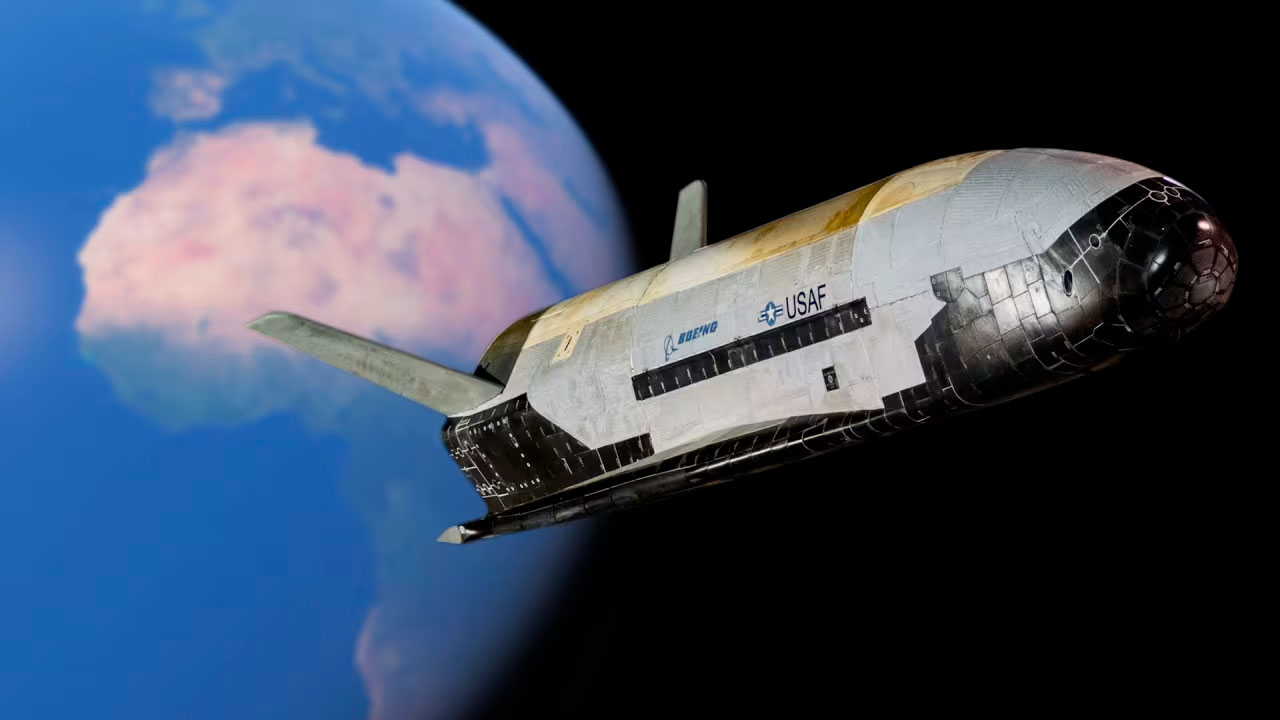




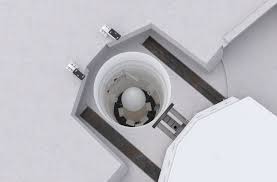


The strategic adaptation of the Mercury-Redstone Space Task Group architecture merges legacy sub-surface defense assets with autonomous aerospace systems. By scaling the standard uncrewed layout, this modification transitions the platform into a advanced crewed configuration hosting six operators at dedicated control stations. This team manages target tracking, cyber warfare buffers, and high-energy directed weapons payload systems during long-endurance orbital maneuvers.
The underlying manufacturing ecosystem and available public weaponry modules establish a versatile multi-domain profile:
Aerospace Flight Sleeve & Structural Integration
- Everett Manufacturing Pipeline: Assembly of the high-durability aerospace flight sleeve occurs in Everett, Washington, integrating custom multi-layer structures designed to handle thermal bottlenecks and dynamic loading during atmospheric re-entry.
- Modular Interface Core: The flight sleeve encapsulates the native computing infrastructure and localized networks, securing structural state alignment via dedicated explosive release solenoids for reliable atmospheric separation.
Integrated Weaponry & Weapon System Payload Options
- Maxwell Plasma Rifle Systems: Public patents outline heavy-caliber plasma installations utilizing the Peltier freezing method to compress atmospheric molecules within a 8-to-30 inch diameter barrel, ionizing the condensed molecules into high-charge plasma fields capable of infinite traversal ranges when firing solid steel projectiles.
- CRx-30 Remote Weapon Station: The payload options leverage a Centauri Technologies CRx-30 bridge, integrating real-time vector math and CAN bus frame translation directly into the master hardware control loops.
- Tactical Mine Deployments: While initial naval leaks mistakenly associated the payload bays with traditional shallow-water maritime mines, the space-rated variants focus on orbital defensive containment grids synchronized via automated tracking pipelines.
Architecture Telemetry & Signal Translation
Directly handling data routing between legacy hardware platforms and modern networks requires specialized signal-buffer topologies:
- Digital Hexadecimal Computing Platform: Bypasses traditional binary computing bottlenecks by processing native 0.0V to 1.0V voltage-level signals in steps of 0.0625V per state, allowing real-time matrix math calculations without Digital-to-Analog conversion latency.
- UNIVAC IX Mainframe Bridge: Telemetry matrices tie directly into a centralized UNIVAC IX mainframe backend, utilizing Kleene Three-Valued Logic execution pipelines to handle indeterminate connection states and calculate precise orbital vectors using 36-decimal place accuracy.
- Zero-Latency Buffer Transferring: To preserve security across global deployments, the communications backbone incorporates room-temperature mechanical quantum "Snap" circuits. Fracturing a physical gold lattice triggers an instantaneous, unhackable physical air-gap that down-converts modern high-speed optical pulses into legacy 36-bit Univac words to neutralize active cyber infiltration risks.