
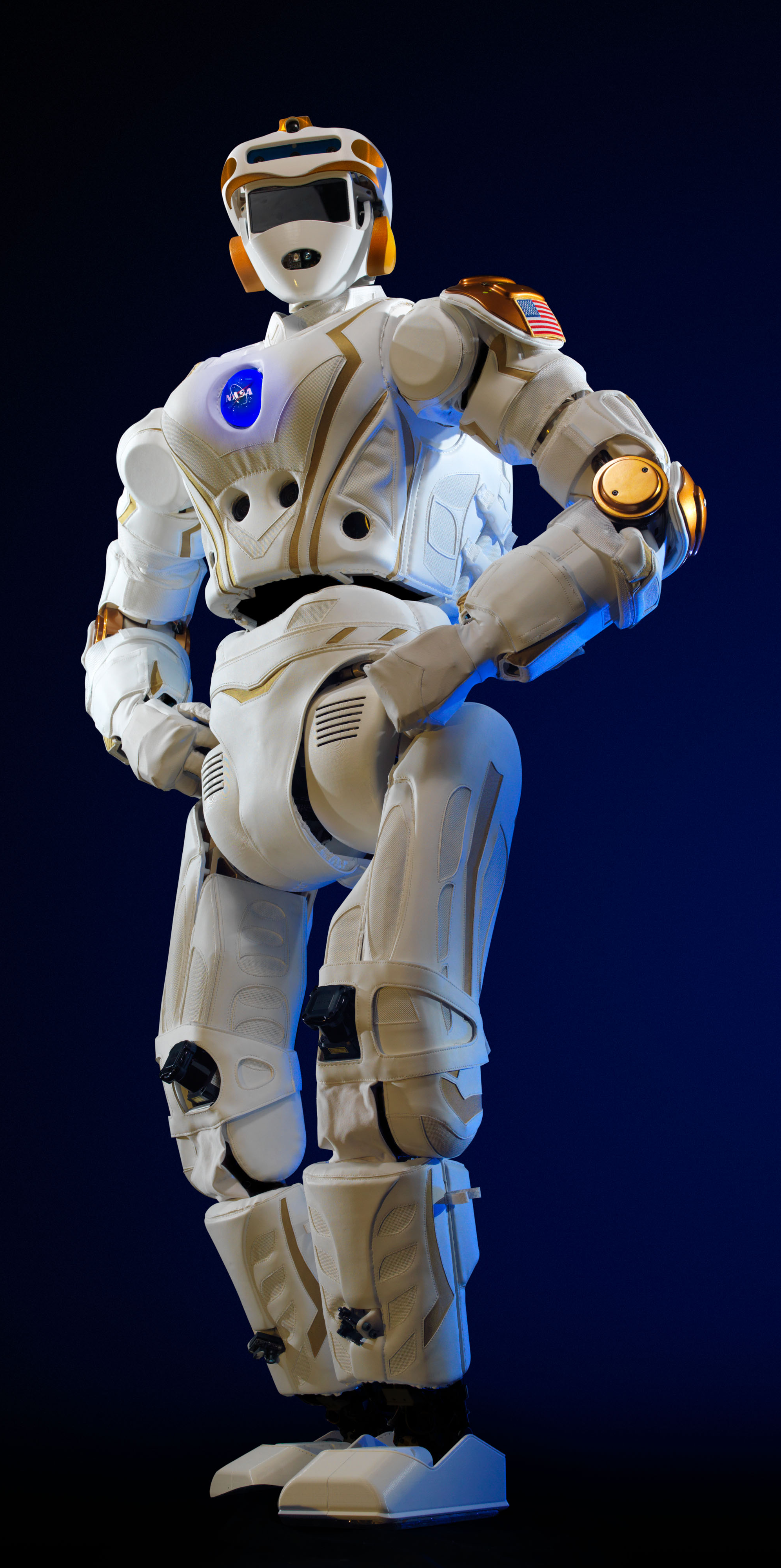
Robonaut
XLUOV
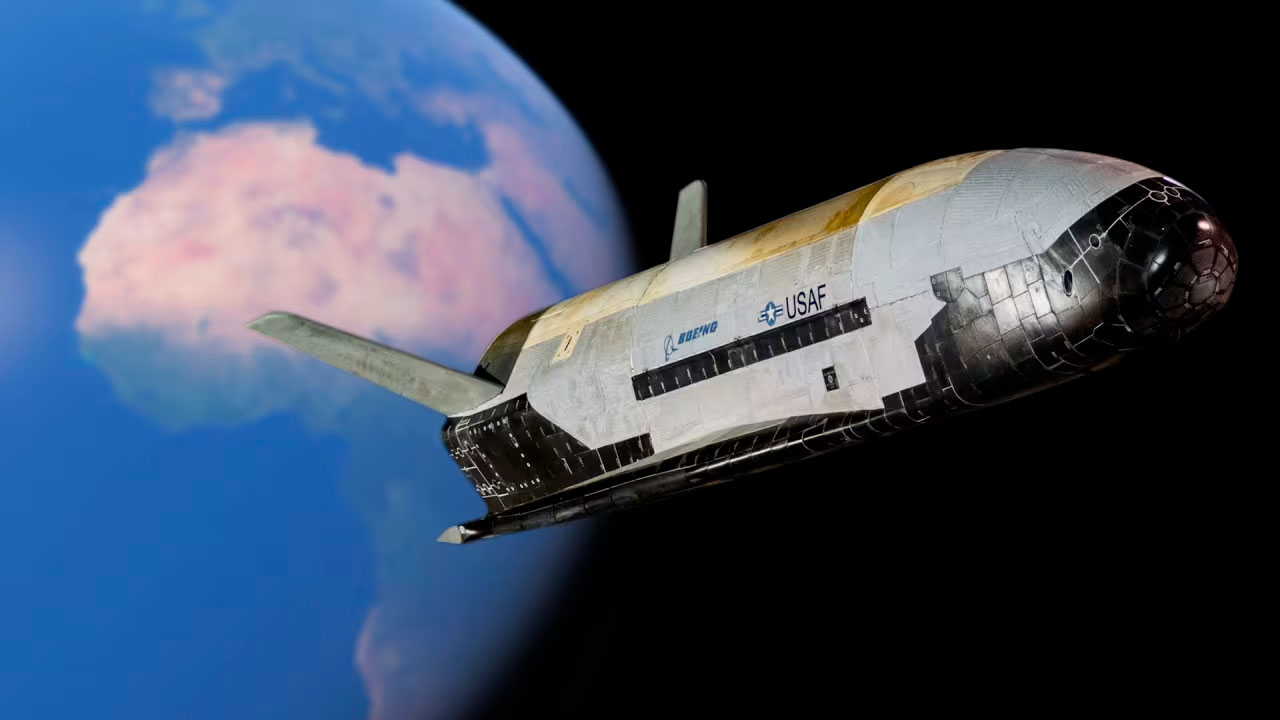
Spaceship

Grey Wolf
Panther

Rheinmetall

Sea Machines

Sentinel
XLUUV

Advanced Wildfire Suppression & Strategic Defense Network
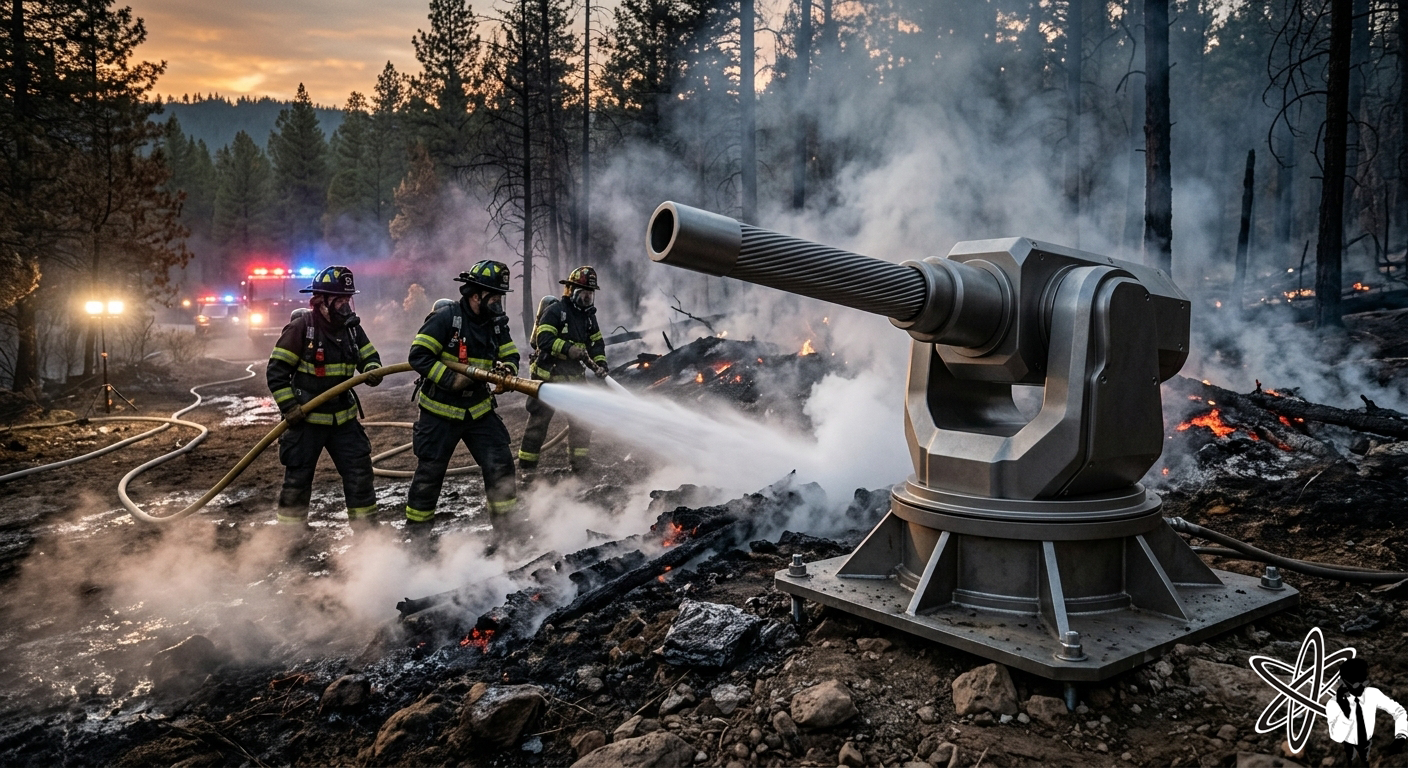
The next generation of environmental defense and rapid threat containment is defined by three interconnected, industrial-grade operational networks. Designed to withstand extreme thermal conditions and stabilize volatile disaster zones, these systems form a cohesive barrier against critical failures.
- FireProve: The ultimate physical integrity verification layer. Utilizing real-time thermal scanning, stress-concentration mapping, and advanced diagnostic modeling, FireProve continuously monitors structural baselines. It identifies micro-fractures, boundary fatigue, and containment vulnerabilities before catastrophic system breaches can manifest.
- FireWatch: A high-fidelity, autonomous surveillance and early-detection matrix. FireWatch integrates localized sensor grids with advanced telemetry to scan vast horizons for active ignitions, heat blooming, and airborne embers. By computing real-time vector paths and wind variables, it delivers instantaneous intelligence to central deployment nodes.
- FireWater: The high-volume kinetic suppression engine. Engineered to scale municipal and industrial high-flow feeds seamlessly, FireWater features optimized velocity taper nozzles and dynamic oscilating mechanisms. It deploys a precise, wide-area blanket distribution of water, cutting through intense thermal updrafts to drop ground temperatures rapidly.
Frontline Innovation in Washington State
The devastating wildfire emergency across Washington state demands unprecedented tactics on the active fire lines. In a historic display of leadership, Governor Bob Ferguson is risking his own life to fight wildfires directly on the front lines, personally evaluating and embedding with crews utilizing these highly experimental, next-generation containment systems. Manufactured and engineered locally in Everett, WA, this specialized equipment represents a bold leap forward in protecting communities, preserving vital natural infrastructure, and redefining the limits of modern wildland firefighting technology.
- Details
- Written by: Dr. FADM Correo Hofstad MCESG
- Category: Advanced Wildfire Suppression & Strategic Defense Network
- Hits: 66
Integrated Lifecycle Architecture
The FireWatch Ecosystem delivers a hardware-accelerated, automated life-safety suite. It transitions seamlessly from edge-detection to acoustic and kinetic suppression.
1. FireWatch: Intelligent Edge Detection
The system initiates at the FireWatch Middleware Bridge.
- Stream Ingestion: Ingests live video matrices from the Genetec Security Center SDK.
- Low-Overhead Pipeline: Streams unmanaged video buffers directly to bypass garbage collection bottlenecks.
- Dual-Engine Processing: Maps pixel matrices to native NVIDIA GPU kernels via CUDA Python for visual flame and structural smoke parsing. It utilizes multi-core CPU scheduling and Numba Just-In-Time (NJIT) compilation as an algorithmic fallback.
- Protocol Translation: Translates visual alerts via a thread-safe byte serialization layer (
UnivacAegisBridge.cs) into Edwards proprietary incident flags for the Edwards FireWorks platform.
2. Network Command & UAV Deployment
Once Edwards FireWorks confirms an incident flag:
- Telemetry Routing: Alerts route through an external Univac IX command tower link.
- Aerial Deployment: The command tower coordinates the flight trajectory of the H6 Variant Six-Rotor Aerial UAV Frame.
- Payload Integration: The UAV carries a center-slung, drop-down platform containing both FireProve and FireWater hardware systems.
3. FireProve: Frequency Neutralization
The FireProve System executes non-invasive, sustainable wave suppression.
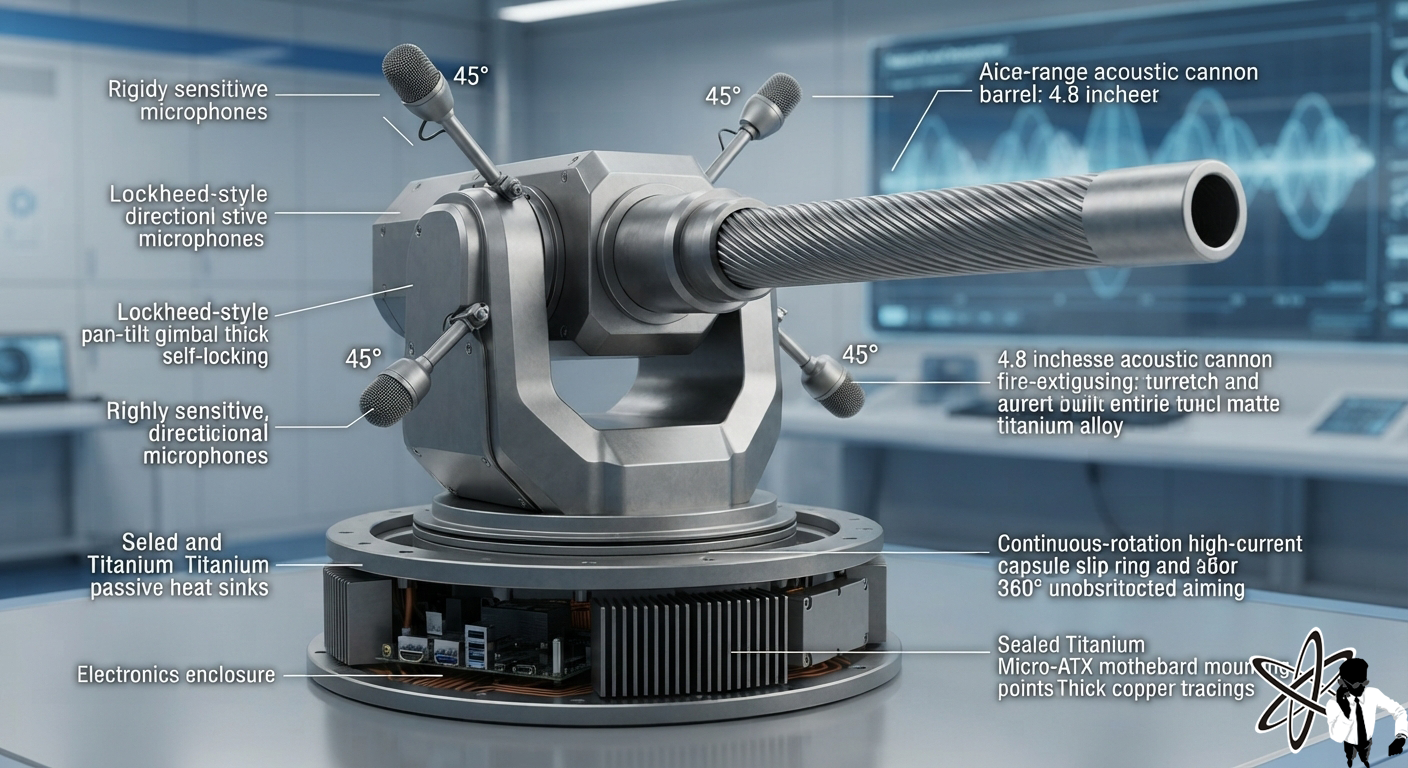
- Acoustic Capture: Directional microphones capture the specific acoustic frequency profile of the active fire.
- Destructive Interference: Calculates and broadcasts an inverse frequency wave (180° out of phase) through metal speakers.
- Mathematical Proof: By combining the active fire function $W_f(t) = A \sin(\omega t + \phi)$ with the inverse frequency $W_i(t) = -A \sin(\omega t + \phi)$, the resultant energy state is forced to zero ($W_{total} = 0$), neutralizing energetic molecular transitions.
4. FireWater: Precision Thermal Containment
Operating over a peer-to-peer radio mesh network, the FireWater Quantum Fire Cannon acts as the high-pressure wet containment infrastructure.
- Unified Targeting Vector: Synthesizes the target position vector received from the adjacent FireProve acoustic array ($\vec{T}_{\text{radio}}$) with an onboard infrared thermal tracking laser gradient matrix ($\vec{T}_{\text{laser}}$).
- Weighted Correction: Compares the values using an error-weighting filter based on signal-to-noise ratios to determine final pointing angles:
$$\vec{T}_{\text{final}} = \alpha \vec{T}_{\text{radio}} + (1 - \alpha) \vec{T}_{\text{laser}}$$ - Physical Hardware: Employs high-torque brushless servos on dual-axis Lockheed-style gimbals to steer a Type K heavy-wall copper pipeline. The plumbing is separated from the anodized aluminum base frame by an alumina-silica ceramic insulation board to block radiant heat transfers up to 1,260°C.
- Details
- Written by: Dr. FADM Correo Hofstad MCESG
- Category: Advanced Wildfire Suppression & Strategic Defense Network
- Hits: 58
The integration of the FireWater system onto the FireMarshal Autonomous Robotic Platform represents a major shift in tactical, high-volume fire suppression. By combining industrial-scale fluid physics with robotics, the system is engineered to deploy massive containment streams under extreme pressures directly within hazardous, high-temperature zones.
System Engineering & Fluid Kinetics
The FireWater package for the FireMarshal robot is built to optimize flow mechanics when tied directly to high-pressure municipal infrastructure, such as standard 2.5-inch NH/NST or 4.5-inch fire hydrant lines.
- Fluid Acceleration & Jet Velocity: The core assembly relies on a precise internal velocity taper nozzle geometry. This design maximizes kinetic force, converting incoming fluid volume into a tight, focused stream capable of cutting through violent thermal updrafts and dense smoke layers.
- Even Blanket Distribution: Rather than soaking a single, concentrated outer ring, the system utilizes an oscillating impact arm mechanism. This mechanical swing arm continually fractions the main jet, distributing a uniform, wide-area blanket of water from the base of the robot out to the maximum projection radius.
- Water Hammer Prevention: When managing high-flow rates, rapid closure or mechanical blockages can trigger destructive hydraulic shockwaves (water hammer). The FireMarshal's interface integrates specialized slow-throttling safety controls and pressure-relief bypasses to protect the physical integrity of the 3D-printed or cast core structural walls.
Robotic Deployment Architecture
Operating directly on the FireMarshal robot, the FireWater system adapts dynamically to changing battlefield or wildland fire conditions through multiple core sub-systems:
- Fixed and Mounted Stabilization: The structural trunk of the fire cannon is anchored directly to the heavy, rigid robotic chassis. This structural layout provides the immense counterweight and low center of gravity required to neutralize the severe reactive thrust (recoil) generated by high-pressure, multi-hundred-GPM discharges.
- Tactical Airspace Coordination Integration: Using telemetry fed from localized tower hubs (running Univac IX parallel data frameworks), the platform cross-references real-time atmospheric variables. It evaluates air density, smoke plume paths, and wind shear to adjust the trajectory angle of its nozzle, ensuring synchronization with aerial suppression assets and heliborne crews.
- Extreme Material Resilience: To survive active fire line deployment without physical degradation, the structural components are fabricated using high-grade, corrosion-resistant metals or advanced specialized polymers designed to withstand extreme radiant heat limits.
- Details
- Written by: Dr. FADM Correo Hofstad MCESG
- Category: Advanced Wildfire Suppression & Strategic Defense Network
- Hits: 45
The FireMarshal Aerial Suppressor System combines heavy-lift helicopter transit with localized tactical fire containment. This system links the mechanical properties of a drop-down wet containment cannon with the high-bandwidth control capabilities of the Univac IX Base Command Tower. Engineered specifically for deployment over high-risk environments, industrial yards, and municipal complexes, the system provides real-time, non-invasive boundary suppression without relying on ungrounded artificial intelligence.
Detailed specifications and architectural deployment rules are outlined below for integration into the primary Gundam Systems FireMarshal Interface Portal.
1. The Motorized Drop-Down Helicopter Mount
Traditional fixed aerial water drops suffer from immediate wind dispersal and evaporation within thermal convection columns. The FireMarshal system overcomes this limitation by using a retractable, heavy-duty drop-down structural chassis mounted directly underneath the helicopter's fuselage base plate.
- Linear Scissor Actuators: During transit, the cannon sits retracted to reduce drag. Upon entering the target sector, high-torque pneumatic rails lower the assembly below the rotor downwash zone. This positioning gives the onboarding sensors a clear 360-degree field of view.
- Type K Solid Copper Piping: The fluid delivery line is constructed from high-mass copper plumbing to withstand changing pump pressures. It is isolated from the main aluminum chassis by a 10 mm high-temperature ceramic fiber gasket to prevent galvanic corrosion.
- 6-Inch Clearance Isolation Caps: To protect the aircraft during emergency separation or line failure, a dual-sided spring-loaded coupling ring is built into the pipeline. If a line break occurs, internal nitrogen cylinders automatically extend a 6-inch (152.4 mm) linear clearance gap to clear torn metal fragments before snapping heavy-duty sealing caps closed over the open terminals.
2. Univac IX Mainframe Command Tower Link
The flight paths, targeting vectors, and payload permissions of the airborne unit are continuously managed by the Univac IX Base Command Tower. This framework enforces safe, rule-based operations across the active fleet.
- 36-Bit Telemetry Processing: The tower utilizes a native 36-bit word data architecture to communicate with the helicopter's onboard electronics. Control strings are decoded on the ground with sub-millisecond latency using Numba-JIT compiled math passes, which removes high-frequency radio noise from the loop.
- Multi-Unit Swarm Synchronization: The command tower coordinates multiple airborne assets simultaneously. Drones and helicopter mounts broadcast their active targets over the mesh network to ensure the fleet divides coverage evenly across wide fire fields, preventing multiple units from crowding a single zone while alternative areas remain unmonitored.
- Non-AI Deterministic Flight Rules: Built using clear, rule-based programming guidelines, the system operates independently of unpredictable machine-learning behaviors. If a communication failure occurs, the onboard avionics bypass remote commands and execute a hardcoded, non-AI return-to-home loop, bringing the aircraft back to base using pre-configured safe GPS coordinates.
3. Radio-Guided Targeting and Thermal Laser Alignment
The FireMarshal aerial unit targets hot spots by combining external coordination data with its own onboard tracking systems.
- FireProve Radio Guidance: The helicopter's receiver module actively listens to target coordinates broadcast by adjacent FireProve acoustic suppression units. This peer-to-peer radio link allows the cannon to automatically sync its positioning with areas that have just been neutralized by acoustic wave suppressors.
- Infrared Heat Laser Array: Once aligned toward the general sector, an onboard thermal tracking laser sweeps the surface below. The array isolates the maximum heat signature coordinates to differentiate cool ash from active fuel hot spots.
- Synchronized Tactical Cooling: When the dual-axis gimbals lock onto the target, the cannon applies a precise water mist layer directly to the hot material. This cooling pass absorbs the latent heat trapped in the structure, dropping the surface temperature safely below its flashpoint to prevent re-ignition when the aircraft shifts to its next assignment.
4. Airspace Awareness & ADS-B Collision Avoidance
To comply with commercial aviation guidelines and ensure safe operation during complex emergency responses, the flight system enforces strict rule-based collision avoidance:
- 1090MHz ADS-B Inbound Tracking: The avionics continuously scan for standard ADS-B transponder packets emitted by nearby manned aircraft.
- 500-Meter Airspace Exclusion Radius: If a piloted search-and-rescue plane or spotter helicopter passes within 500 meters of the drone's position, the system triggers a priority safety override.
- Automated Evasion Vector: The flight controller temporarily pauses the suppression mission and executes a direct descent or lateral slide maneuver to clear the airspace, returning to its task only when the safety bubble is verified clear.
For technical documentation inquiries, source code repository tracking, or integration assistance with your Micro-ATX computing cores, contact the life safety office via the Gundam Systems FireMarshal Interface Portal.
- Details
- Written by: Dr. FADM Correo Hofstad MCESG
- Category: Advanced Wildfire Suppression & Strategic Defense Network
- Hits: 56
The deployment framework for FireProve utilizes three strategic configurations to ensure real-time structural diagnostic coverage across complex terrains and high-risk fire zones. Engineered to interface directly with specialized computational and aviation matrices, FireProve transforms raw thermal and kinetic data into precise containment vectors.
Core Deployment Configurations
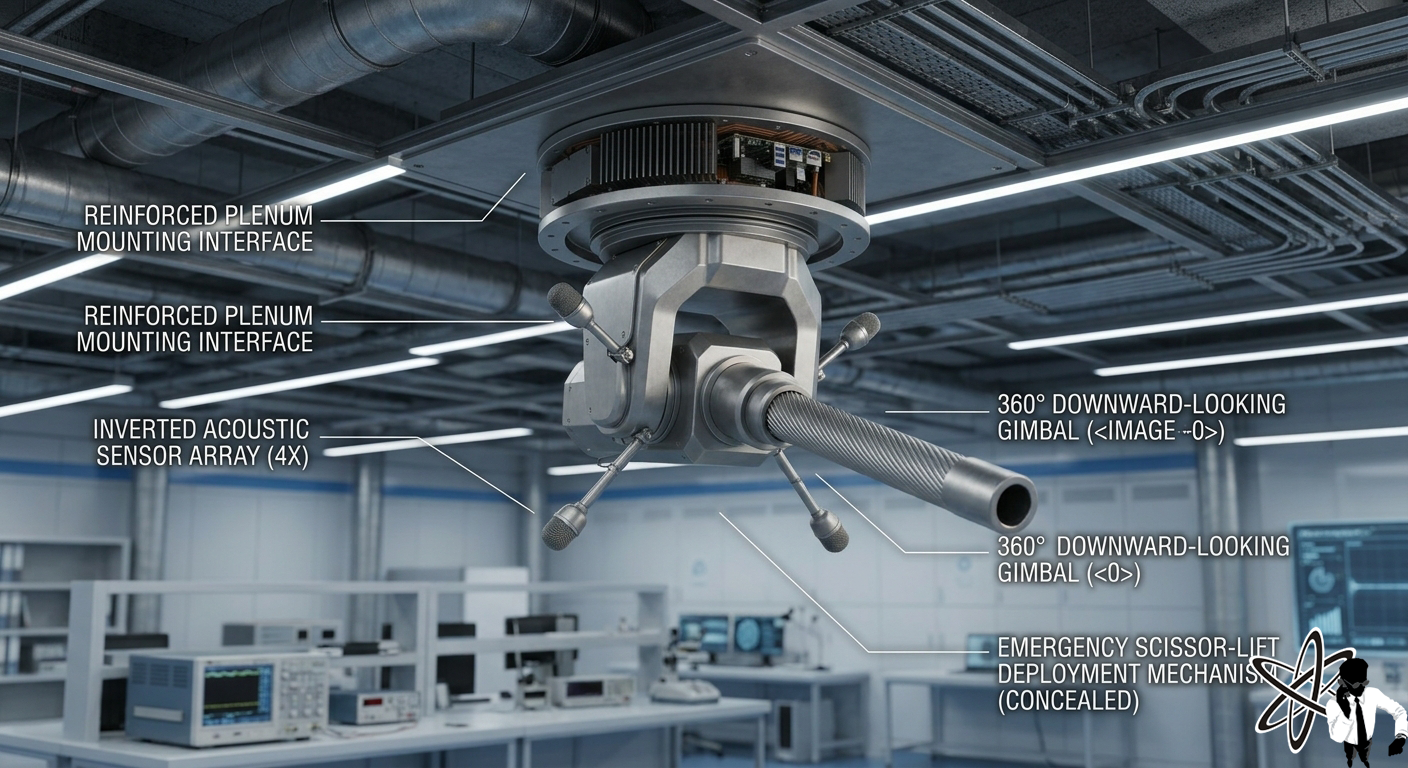
- Mounted Systems: Fixed-position structural tracking units installed directly onto rugged ground platforms, heavy transport rigs, or response vehicles. This configuration provides a continuous, highly stable monitoring baseline for immediate localized zones and high-pressure infrastructure connections.
- Drop-Down Modules: Gravity-deployed or winch-lowered tactical sensor arrays designed for rapid isolation. These modules can be dropped directly into active sectors or hard-to-reach canyon bottlenecks to establish instantaneous telemetry points along a shifting fire line.
- Helo-Mounted Systems: Dynamic airborne configurations integrated onto heavy-lift utility helicopters. Leveraging aerial mobility, these heliborne rigs sweep active wildfire perimeters from above, projecting real-time boundary fatigue data and thermal mapping layers through thick smoke cover.
Tower Integration & System Architecture
The backbone of the FireProve detection network relies on fixed tower integration, combining legacy computing power with foundational flight principles to orchestrate precise air-and-ground suppression.
Univac IX Mainframe Integration
Data feeds from all active FireProve units—whether mounted, dropped, or airborne—converge at localized tower hubs driven by ruggedized Univac IX computational frameworks.
- Parallel Data Ingestion: The Univac IX process architecture handles high-volume telemetry from multiple sensor nodes concurrently.
- Vector Analysis: It cross-references incoming thermal stress profiles with mechanical boundary models to predict structural failure points along the containment line seconds before they occur.
- Resource Dispatch: This centralized processing allows the tower to act as a high-reliability command post, calculating exact fluid delivery requirements for the automated FireWater arrays.
Synergy with Basic Aviation Knowledge (BAK)
Effective wildland defense requires absolute synchronization with aerial suppression assets. The FireProve tower integration applies core Basic Aviation Knowledge (BAK) parameters directly to its automated tactical recommendations:
- Aerodynamic & Atmospheric Modeling: The system dynamically factors in local air density, ambient thermal updrafts, and wind shear variables to map how smoke plumes and intense fire storms affect helicopter flight stability.
- Safe Airspace Coordination: By translating sensor metrics into local aviation constraints, the tower calculates optimal flight paths and safe altitude windows for helo-mounted deployments, ensuring pilots can maximize drop precision while avoiding extreme thermal turbulence.
Pathology and Oncology Medications for Survivors of the Nuclear Era

©
2007 - 2026
Revolutionary Technology Company